Friday, March 3, 2017

Best February 2017 Photos here at the L.A. County Arboretum and Botanic Garden -Enjoy!


March Plant Information Soils Class Outline

I'd like to thank all who attended my soils class -here's a copy of the outline for you if you didn't get one in class:

The Universe Below: What You Need to Know, and the Amazing Things You Probably Don’t Know About How Soils Work
1.       Soil Formation
2.       Physical and Chemical Properties of Soil
a.       Soil types­
b.       Worm test
c.       Cation exchange capacity (Cal soils have high)
d.       Density
e.       Aggregates
f.        Porosity
g.       Rapid Backyard Composting
                                                               i.      ½ green, ½ brown
                                                             ii.      Not a good idea on natives and N sensitive plants
                                                           iii.      Pieces no larger than 1 inch
                                                           iv.      Turn, water and burn
h.       pH
i.         Salinity (drought related salt buildup)
j.         It’s a jungle down there (earthworms etc.)
k.       Fungi
3.       Soil and Water
a.       Soil Capacity
b.       PWP
4.       Soil Fertility and Plant Nutrition
a.       Essential and secondary nutrients
5.       Fertilization of Garden Soil
a.       Organic vs. Inorganic
b.       Availability over time of O vs. I
c.       Containers
6.       Soil Properties
a.       Soil Amendment
b.       When and Where to Amend
c.       Rates
d.       Perc Test
e.       Preventing Soil Breakdown
                                                               i.      Planting, Wetting drying, Bacterial decomposition, Amendment
                                                             ii.      pH modifying
7.       Potting and Container Soil
a.       Perched water tables
b.       Osmotic potentials

c.       Drainage

Saturday, February 18, 2017

It's Not Fruit; It's Manzanita Leaf Gall Aphids


Yesterday this came into my office:

Fruit-like galls on the newer leaves of a manzanita. 
It's a Manzanita (Arctostaphylos) with what look like berries or peppers growing near the top of the plant. Turns out they are the handiwork of the manzanita leaf gall aphid (also called the manzanita leaf-fold aphid), a plant juice sucking insect that injects just the right mix of plant-hormone like substances into the manzanita it's feeding on to cause the leaf to pucker up and color up and look just like a fruit. This protects the aphid from predators and doesn't seem to hurt the manzanita much. It is caused by animal browsing, pruning or fertilization as the soft new growth that follows any of these actions is highly susceptible to infestation by the aphid. 
Manzanita leaf gall aphids visible after dissection of the gall with a razor blade.


Manzanita Leaf Gall Aphid Links


Manzanitas - UC Master Gardener Program of Sonoma County
Red Leaf Galls on Manzanita in Arizona's Sycamore Canyons
Manzanita Leafgall Aphid (Tamalia coweni) · iNaturalist.org
Pseudo-peppers, Manzanita Leaf-gall Aphid (Tamalia coweni) - The Firefly Forest
Pests of Landscape Trees and Shrubs, Third Edition: An Integrated Pest ... - Google Books
Manzanita Leaf Gall Aphid - Tamalia coweni - BugGuide.Net

Saturday, January 21, 2017

South Pasadena Ailing Avocado


Area underneath Avocado tree. 

South Pasadena Ailing Avocado


Q. I live in South Pasadena and we have an avocado tree that is more than 50 years old that appears to be dying. The canopy has shrunk significantly, the leaves have brown edges and are falling and there are a lot of dead branches. In addition, the tree is producing less and less fruit each year.  

We've tried to increase watering the tree, but it does not appear to be helping. Any recommendations to help save our tree?

A. You actually have a very lucky tree; the conditions I see in the photo are not the best for avocados.

The area underneath an avocado tree should be free and clear of lawn and high amounts of soil compacting human activity. Also, the best thing to have underneath an avocado tree’s canopy is a thick carpet of its own fallen leaves.

The avocado’s leaves decay to from a substrate that is perfect for those organisms and microorganisms, insects, worms, protozoa, bacteria, fungi, nematodes etc. which are beneficial to the avocado. Add to that the fact compacted soil tends to be devoid of these organisms and the amount of water that the lawn underneath the tree needs to keep it green is an ideal breeding ground for a type of fungi-like organism (Phytophthora) that eats avocado roots for dinner, and you have the perfect recipe for the slow but sure demise of your tree.

Also, the drought has probably caused considerable salt buildup underneath the root zone of the tree. Fortunately, these recent rains should take care of that.

So what to do? Remove all lawn from underneath the canopy of the tree (on both sides of the fence if possible). Apply horticultural gypsum to the soil at the rate of about 25 pounds scattered throughout the area underneath the canopy, then lay down a 5-inch-thick layer of shredded (if you don’t have squirrels or rats, they love the shredded stuff) or small sized (this one’s the best) fir bark underneath the entire area underneath the canopy of the tree except for an are 4-5 inches from the trunk (you don’t want the fir bark piled up against the trunk, that can cause a condition where the tree’s bark becomes infested with insects and fungus owing to the humidity raising and fungal spore nurturing nature of the fir bark). Also Then allow the avocado’s soil nurturing leaves to remain where they fall in Perpetua.

Do not feed your avocado much; high nitrogen levels in the leaves and tissues favor pest infestation. Use about ½ strength Avocado/Citrus food just once a year (in November -it’s too late now). If you have a problem with leaves falling off after this, it is most probably Persea mite. This pest is mostly a nuisance but during the drought has become more than that, causing total defoliation in some cases. It can be controlled using horticultural oil and cultural management.

Please let me know how these measures are working or not in about six months’ time. 

Wednesday, January 11, 2017

Shade Plants for Drier Gardens

Although nothing grows is complete darkness (plants will etiolate, or weirdly stretch though) except for some parasitic plants, these plants will hold their own in many shade cursed areas in your garden. 

Aspidistra elatior

Commonly called the "Cast Iron Plant" for good reason; this slow growing but hardy Taiwanese native can take all kinds of abuse including abysmal light levels and infrequent watering (once established). 

Liriope 


Pronounced like 'calliope', this Chinese native thrives in bright shade to partial sun and moderate water -but will survive a moderate dry spell no worse for the wear after it has been established for at least a year or two. In part sun you can expect them to flower with either white or blue spiky blooms, but if they are planted in mostly shade, then they probably will not. 

 Mondo Grass

Ophiopogon japonica, commonly called 'Mondo Grass',i s a lily-like ground-cover that looks kind of like grass if you like lumpy lawns. It is, however, a good ground cover plant for shady areas and, once established (a process which can take some time), can tolerate short to moderate periods of drought. Pictured above are standard sized and dwarf Ophiopogon japanica. 

 Nandina

Nandina, a dwarf variety, growing in the shady part of the entrance walk at the Arboretum. 
Full sized Nandina kicking it on the shady north side of a wall. 
Nandina, commonly called 'Heavenly Bamboo', is an ubiquitous element of many Southern California gardens for a good reason; it is incredibly tolerant of low light, low water and low maintenance. Also a Chinese native (are you noticing a trend here?), some people worry about the toxicity of its berries to cats and Cedar Wax Wings -however in low light it tends not to produce as many (if any) berries as in full to half day sun. 

Clivia

Clivia

Clivia

Clivia x cyrtanthiflora
Hailing from the Southern parts of Africa, this strap leaved, winter and spring flowering plant is tough. Although it does enjoy water when it's blooming, when it's not it can go two weeks or more between watering. There are several different varieties including one with a yellow flower. Sometimes you will plant Clivia and it has a hard time blooming. The secret is to plant them in bottomless pots or very close (less than a foot) from each other. For some reason being crowded seems to induce more bloom. 

Asparagus


Asparagus densiflorus 'meyerii'. 
Not the one you eat but the ornamental kinds like A. densiflorus 'meyerii' and A. aethiopicus (syn. sprengeri). Once established these hardy plants may be hard to control, just remember that they can spread via bulbs that they copiously produce underground. 

 Abutilon

Once established these Hibiscus family members with the unfortunately misleading common name of "Chinese Maple" are extremely hardy in some fairly shaded areas once they are established (this I know from personal experience -I had one in a completely shaded area of a house I once had and it would not die no matter how badly I ignored it).  It comes in low growing and somewhat vine-like bushy varieties, the latter which have proved themselves survivors. 

Mahonia


Mahonia oiwakens subsp. lomariifolia

Mahonia repens
This group of hardy shade loving plants is native to the west coast of the United States and Asia and is one of the few plants to produce yellow flowers in the shade. Mahonia repens is a low growing ground-cover whereas Mahonia oiwakens subsp. lomariifolia is tall (up to 6-7 feet) and beautifully lanky. 

Carissa


Variegated Carrisa

Dwarf and standard C. macrocarpa
This African native not only is an excellent dry area part shade to bright full shade ornamental, its ripe berries are edible! Several varieties are available including a dwarf and variegated type. What's the drawback to its seeming perfection? It is somewhat frost tender, and can experience considerable (though recoverable) die-back in cold years. 

Amaryllis and Amaryllis Hybrids 

Amarygia hybrids, a cross between Brunsvigia and Amaryllis. 
 Commonly called 'Naked Ladies', these South African bulbs produce beautiful pink blooms on stalks with no foliage in the hottest part of the summer, usually mid to late August. They will reliably bloom in bright shade, filtered sun, or even half day to full sun.

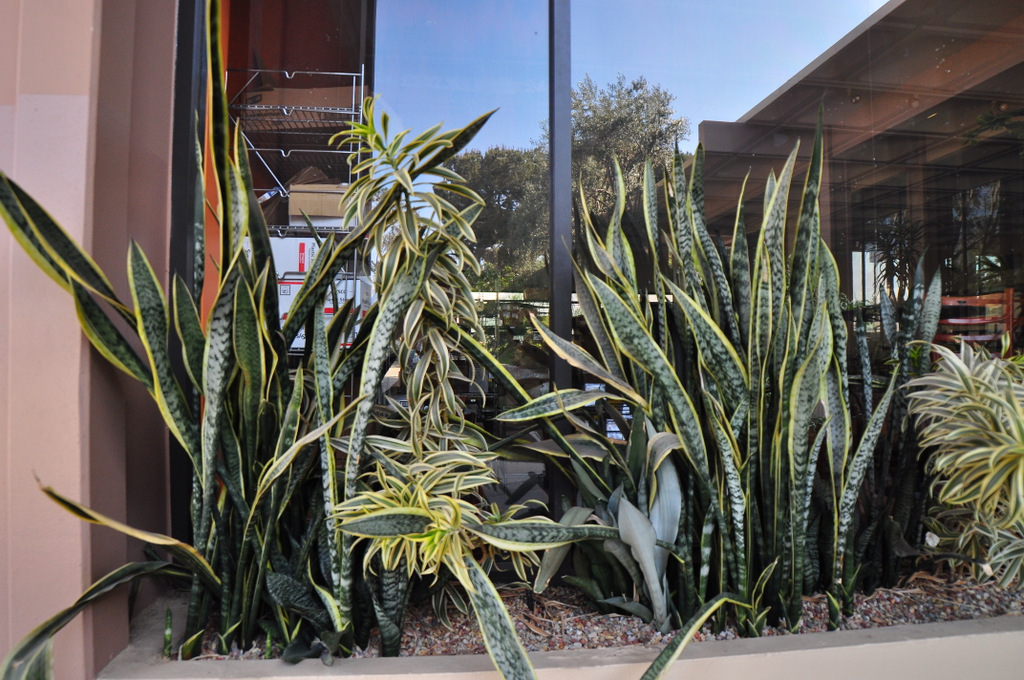
Sansavieria

Various species and varieties of Sansavieria. 
Ultimately hardy, these African natives thrive on neglect -just don't water them too much. They grow in half day to full sun, but will gracefully tolerate (and even thrive) in filtered sun to bright shade.

Tuesday, December 20, 2016

Assassin's Creed

Assassin Bug (Nymph)


Just in time for the release of the "Assasin's Creed" movie I received this picture of a bug to identify. Turns out it is not only a 'bug', but a true bug, a member of the order Hemiptera, a large order of piercing sucking insects that includes aphids and bed bugs. This one is a little more welcome than the previously mentioned bugs: it's a predator of aphids and other harmful insects.

Thursday, December 15, 2016

Jawdropping Fall Color at the Arboretum

There, I've used a Buzzfeed keyword; it is well deserved however. Right now we're probably looking at the last gasp of really spectacular fall color until next year; this is because the heavy rain predicted for this evening may just well knock off most of the fall foliage that is currently peaking here at the Arboretum.
A species Liquidambar near the Peacock cafe. 

Crepe myrtle in full color near the Peacock Cafe. 

Aloes starting to bloom in the South African section. 


Crepe myrtle (right) and Persian ironwood (left)

Persian ironwood. 

Wild wisteria vine growing on trees on the north edge of the Tropical forest section. 

Wild wisteria and wild grape vines clambering on foliage on the north side of the Tropical forest. 

Pink Handroanthus paulensis blooms (right) surrounded by white Shaving brush tree blooms. 

Pink Handroanthus paulensis  and white Pseudobombax ellipticum blooms on the east shore of the Baldwin lagoon. 

Ginkgo biloba tree framing Cycads. 

Ginkgo biloba tree framing Cycads. 

Followers